MERXENG Window and Portable Air Conditioners
MERXENG's AC line runs from a 6,000 BTU window unit suited for smaller bedrooms up to a 14,000 BTU portable that handles rooms up to 750 sq ft. All five portable models include a built-in dehumidifier and fan mode, and both window units install on standard 115V household circuits. These are units built for renters, homeowners with problem rooms, and anyone who needs real cooling without a central HVAC installation.

All Six Models at a Glance
8000 BTU WiFi Window AC
See on Amazon
6000 BTU Window AC 375 sq ft
See on Amazon
14000 BTU Portable AC 750 sq ft
See on Amazon
12000 BTU Portable AC 550 sq ft
See on Amazon
8000 BTU Portable AC 350 sq ft
See on Amazon
8000 BTU Portable AC White
See on Amazon
BTU Portable Air Conditioner
See on AmazonSee more products
Discover the full product lineup with current selection on Amazon.
All products on AmazonSide-by-Side Specifications
All six MERXENG AC models compared on the specs that determine fit — BTU, coverage, noise, wattage, and installation type.
| Model (ASIN) | BTU | Coverage | Noise | Wattage | Installation | Key Features | Best For |
|---|---|---|---|---|---|---|---|
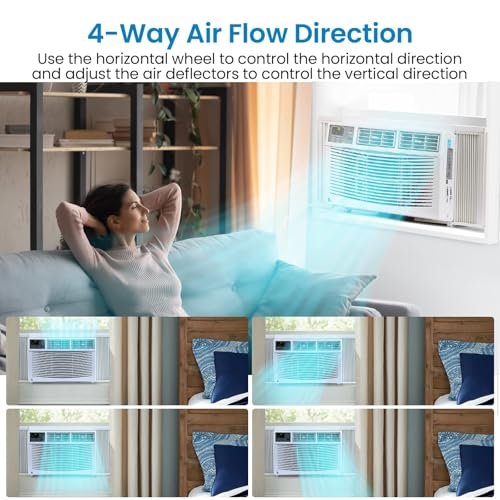
| 8,000 BTU Window (B0GSFMFLQ9) | 8,000 BTU | Up to 650 sq ft | 42 dB | 850W | Window mount | WiFi, 4-way swing, sleep mode, silent mode | Larger rooms, bedroom use, app control needed |
| 6,000 BTU Window (B0GGGMZ533) | 6,000 BTU | Up to 375 sq ft | 52 dB | 680W | Window mount | Remote control, washable filter, 3 cooling speeds | Standard bedrooms, lower energy draw |
| 14,000 BTU Portable (B0GWLR5Q3T) | 14,000 BTU | Up to 750 sq ft | 48 dB | Not listed | Portable / floor standing | 3-in-1, drainage-free, 24H timer, auto swing, sleep mode | Large rooms, open floor plans, no window mount option |
| 12,000 BTU Portable (B0GX1GD42F) | 12,000 BTU | 450–550 sq ft | 52 dB | 1,200W | Portable / floor standing | 3-in-1, 4-way swing, dehumidifier, remote | Large bedrooms, home offices, mid-size rooms |
| 8,000 BTU Portable — Compact (B0GWQZ4W4B) | 8,000 BTU | Up to 350 sq ft | 52 dB | 850W | Portable / floor standing | Heating & cooling, 24H timer, auto evaporation, smallest footprint | Small rooms needing year-round use, tight spaces |
| 8,000 BTU Portable — Tall (B0GTV3WLCN) | 8,000 BTU | Up to 350 sq ft | 53 dB | 850W | Portable / floor standing | 3-in-1, remote, 24H timer, residential rated | Renters, apartments, rooms without window mount access |
| 8,000 BTU Portable — Black/White (B0GWR2FS73) | 8,000 BTU | Up to 350 sq ft | 55 dB | Not listed | Portable / floor standing | 3-in-1, sleep mode, dehumidifier, remote | Smaller rooms where window installation isn't possible |
If a window mount is possible, the 8,000 BTU window unit (B0GSFMFLQ9) delivers the best combination of coverage, noise level, and features at that output — the 42 dB rating and 650 sq ft coverage are meaningfully better than any portable at the same BTU. If a window mount isn't an option, match coverage first: 350 sq ft or under goes to any 8,000 BTU portable, 450–550 sq ft to the 12,000 BTU model, and anything up to 750 sq ft to the 14,000 BTU unit.
How to Match BTU Rating to Your Room
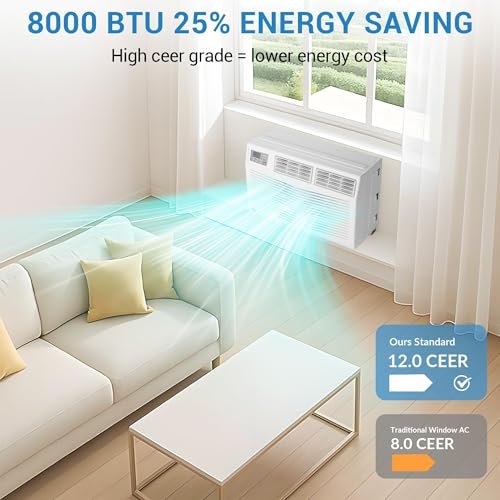
BTU is the number that determines whether a unit actually cools your room or just runs constantly without getting ahead of the heat load. The rule of thumb — 20 BTU per square foot — holds reasonably well for standard rooms with average ceiling height and insulation. MERXENG's line breaks into three BTU tiers: 6,000 BTU for rooms up to 375 sq ft, 8,000 BTU for rooms up to 350–650 sq ft depending on the model and installation type, and 12,000–14,000 BTU for larger spaces up to 550–750 sq ft.
The BTU-to-coverage spread matters here because the same BTU output performs differently in a window unit versus a portable unit. The 8,000 BTU window unit (B0GSFMFLQ9) covers up to 650 sq ft — meaningfully more than the three 8,000 BTU portable models, which are rated for 350 sq ft. That gap exists because window units exhaust heat directly outside through the rear of the unit, while portable units use a vent hose through a window kit. The portable design is slightly less thermally efficient, which is why the coverage numbers differ even at identical BTU ratings. Neither type is wrong — but understanding that trade-off helps you set accurate expectations before you buy.
- Up to 375 sq ft: 6,000 BTU window unit (B0GGGMZ533) — correct sizing for a standard bedroom or small living space
- Up to 350 sq ft (portable) / 650 sq ft (window): 8,000 BTU — three portable options and one window unit at this output level
- 450–550 sq ft: 12,000 BTU portable (B0GX1GD42F) — the right step up when the 8,000 BTU portable falls short
- Up to 750 sq ft: 14,000 BTU portable (B0GWLR5Q3T) — for larger rooms, open floor plans, or spaces with high heat gain from sun exposure or poor insulation
If your room is on the boundary between two tiers — say, 340 sq ft with large west-facing windows — go up a tier. Undersizing an AC unit by even 10–15% means it runs at maximum output continuously, which shortens compressor life and still doesn't fully cool the space on hot afternoons.
Window Units versus Portables for Your Setup
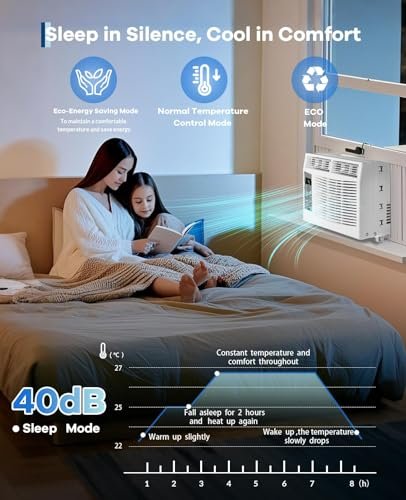
The decision between a window unit and a portable unit usually comes down to your specific room and window situation, not personal preference. Window units (the 6,000 BTU and 8,000 BTU models) mount permanently in a double-hung or sliding window and exhaust heat directly outside through the rear. They're more thermally efficient at a given BTU rating, generally quieter per BTU of output, and don't take up floor space. The 8,000 BTU window unit runs at 42 dB — that's genuinely quiet, comparable to a library ambient level — and the 6,000 BTU model is rated at 52 dB, which is closer to normal conversational background noise.
Portable units make sense when a window unit isn't an option: casement windows that don't accommodate a standard frame, HOA or lease rules against window installations, or rooms where you need cooling in different locations on different days. All five MERXENG portable models ship with a window kit — the vent hose, sealing plate, and window bracket — so no additional hardware purchase is required. The 14,000 BTU portable (B0GWLR5Q3T) is the largest unit in the line and the only one rated for rooms up to 750 sq ft; it also features auto-swing airflow and a 24-hour timer, making it the right choice for a large primary room where you want set-and-forget scheduling. The 12,000 BTU portable (B0GX1GD42F) is sized for the 450–550 sq ft range — a large bedroom, a home office with equipment heat load, or a converted garage space.
For buyers who specifically need a compact footprint, the 8,000 BTU portable (B0GWQZ4W4B) measures 12.95 inches deep by 12.44 inches wide — the narrowest portable in the line — and includes a heating and cooling function, which none of the other MERXENG models list. That makes it a legitimate year-round option if you're heating a small room as well as cooling it. The other two 8,000 BTU portables (B0GTV3WLCN and B0GWR2FS73) are slightly taller and cover the same 350 sq ft, with minor differences in noise rating and finish color.
Setup, Maintenance, and Getting the Most from These Units
Window unit installation follows a standard sequence: extend the side accordion panels to fill the window width, secure the unit with the included hardware, and plug into a standard 115V outlet. Both MERXENG window units run on 115V and don't require a dedicated circuit for most residential installations, though running any AC on a circuit shared with other high-draw appliances is worth avoiding. The 8,000 BTU window unit draws 850 watts; the 6,000 BTU draws 680 watts. Neither requires a 240V outlet.
The washable filter on the 6,000 BTU window unit is worth noting as a maintenance point for all models in the line — AC filters collect dust, pet hair, and particulates, and a clogged filter is the single most common reason a unit loses cooling efficiency without any mechanical failure. Rinse the filter monthly during heavy use seasons, let it dry completely before reinstalling, and expect noticeably better airflow if you've been running on a dirty filter. For portable units, the drainage-free design on the 14,000 BTU model (B0GWLR5Q3T) means condensate is evaporated and exhausted through the vent hose rather than collecting in a tank — one less maintenance step compared to units that require manual draining or a continuous drain line.
- Sleep mode: Available on the 8,000 BTU window unit (42 dB baseline), the 14,000 BTU portable, the 12,000 BTU portable, and the 8,000 BTU portable (B0GWR2FS73). Sleep mode gradually adjusts the temperature set point upward overnight, reducing compressor cycling and noise. If bedroom noise is a primary concern, the 8,000 BTU window unit's 42 dB baseline is the quietest starting point in the line.
- 24-hour timer: Present on the 14,000 BTU portable and the two 8,000 BTU portables (B0GWQZ4W4B and B0GTV3WLCN). Set the unit to start cooling 30 minutes before you get home rather than running it all day — the most practical energy-reduction step available on these models.
- WiFi control: The 8,000 BTU window unit (B0GSFMFLQ9) is the only model in the line with WiFi enabled. If remote scheduling or app control matters to your use case, that's the unit — it's also the highest-coverage window unit at 650 sq ft.
- Dehumidifier mode: All three-in-one portable models run a standalone dehumidify mode separate from cooling. In shoulder-season months when temperatures are moderate but humidity is high, running dehumidify mode instead of full cooling draws less power and addresses the actual discomfort source.
Frequently Asked Questions
What's the actual difference between the three 8,000 BTU portable models?
All three cover the same 350 sq ft and draw 850 watts, so the differences are in the details. The compact model (B0GWQZ4W4B) has the smallest footprint at 12.95 × 12.44 inches and is the only one that includes a heating function — relevant if you need the unit in winter. The tall white model (B0GTV3WLCN) is explicitly rated for residential use and includes a 24-hour timer. The black/white model (B0GWR2FS73) is the loudest of the three at 55 dB but includes sleep mode. If noise is your primary concern among the portables, the compact model at 52 dB is the quietest 8,000 BTU portable in the line.
Will a portable AC make my room humid even while cooling?
Single-hose portable units pull air from inside the room to exhaust heat outside, which creates slight negative pressure and can draw in warm, humid outside air through gaps around doors and windows. It's a real trade-off compared to window units, not a myth. The practical mitigation is the standalone dehumidifier mode available on all MERXENG portable models — running it on high-humidity days without full cooling draws less power and directly addresses moisture. For buyers who find humidity more uncomfortable than heat, the 14,000 BTU portable's drainage-free design also means condensate is exhausted rather than collecting and re-evaporating inside the unit.
Does the 8,000 BTU window unit actually need WiFi setup to work?
No. The WiFi feature on the B0GSFMFLQ9 is additive — the unit operates fully via remote control and the onboard control panel without any app or network connection. WiFi enables remote scheduling and control from a phone, but skipping setup entirely doesn't disable any cooling, sleep mode, or fan functions. If you don't use smart home apps, you're not losing cooling performance by ignoring the WiFi capability.
Can I use these units in a room with casement or crank-out windows?
The two window units (6,000 BTU and 8,000 BTU) require a standard double-hung or sliding window — they won't fit a casement window without a specialized adapter kit, which MERXENG does not list as an included accessory. If casement windows are your only option, the portable models are the correct choice. All five portables ship with a window kit that includes a vent hose and sliding panel designed to work with most standard casement and sliding windows for exhaust venting.
How loud is 42 dB versus 55 dB in practical terms?
42 dB is roughly equivalent to a quiet library or a rural bedroom at night — noticeable if the room is otherwise silent, but not disruptive to sleep for most people. 52–53 dB is closer to normal ambient conversation or a running refrigerator — clearly audible, acceptable as background noise in a living room or office, but potentially noticeable in a quiet bedroom. 55 dB starts to feel like a consistent white noise presence. The 8,000 BTU window unit at 42 dB is the quietest unit in the line by a meaningful margin; if sleep disruption is a real concern, that unit or the 14,000 BTU portable at 48 dB are the options worth prioritizing.
Do these units require professional installation?
No. Both window units install without professional help — the standard double-hung window process takes 20–30 minutes with basic tools, and all required hardware is included. Portable units require even less setup: position the unit, connect the exhaust hose, fit the window panel into your window opening to vent the hose outside, and plug in. The 14,000 BTU portable specifically notes hassle-free design and easy operation as part of its listed features. None of the six MERXENG models require 240V wiring, refrigerant handling, or any modification to your home's electrical system.